In the modern web development landscape, sticking to “vanilla” React is becoming rare for production apps. Developers are increasingly turning to meta-frameworks that handle the heavy lifting, routing, server-side rendering (SSR), and optimization.
Currently, the three big contenders in the React ecosystem (though one is strictly “React-optional”) are Next.js, Astro, and Remix. While they share similarities, they have vastly different philosophies on how to build the web.
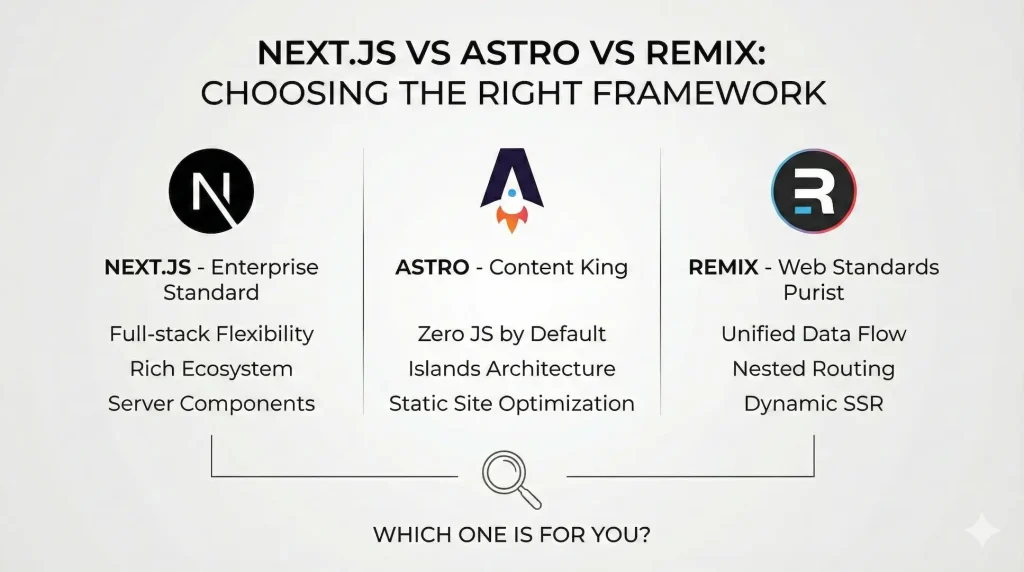
Here is a breakdown of what makes each one tick and how to choose the right tool for the job.
1. Astro: The Content King
Philosophy: “Zero JavaScript by default.”
Astro is distinct because it isn’t strictly a React framework. It is a “bring your own framework” (BYOF) tool that lets you write UI components in React, Vue, Svelte, or Solid, but it renders them to static HTML during the build process.
- The “Islands” Architecture: This is Astro’s superpower. Instead of hydrating the entire page into a massive React app (which is slow), Astro treats your page as static HTML. You explicitly tell it which specific components need to be interactive (like a search bar or a carousel) using “islands.” Only those islands load JavaScript.
- Performance: Because it strips away unused JavaScript, Astro websites are often significantly faster and lighter than those built with Next.js or Remix out of the box.
- Best For: Content-heavy websites. Think blogs, marketing sites, documentation, portfolios, and e-commerce catalogs where SEO and initial load speed are paramount.
2. Next.js: The Enterprise Standard
Philosophy: “Batteries-included full-stack React.”
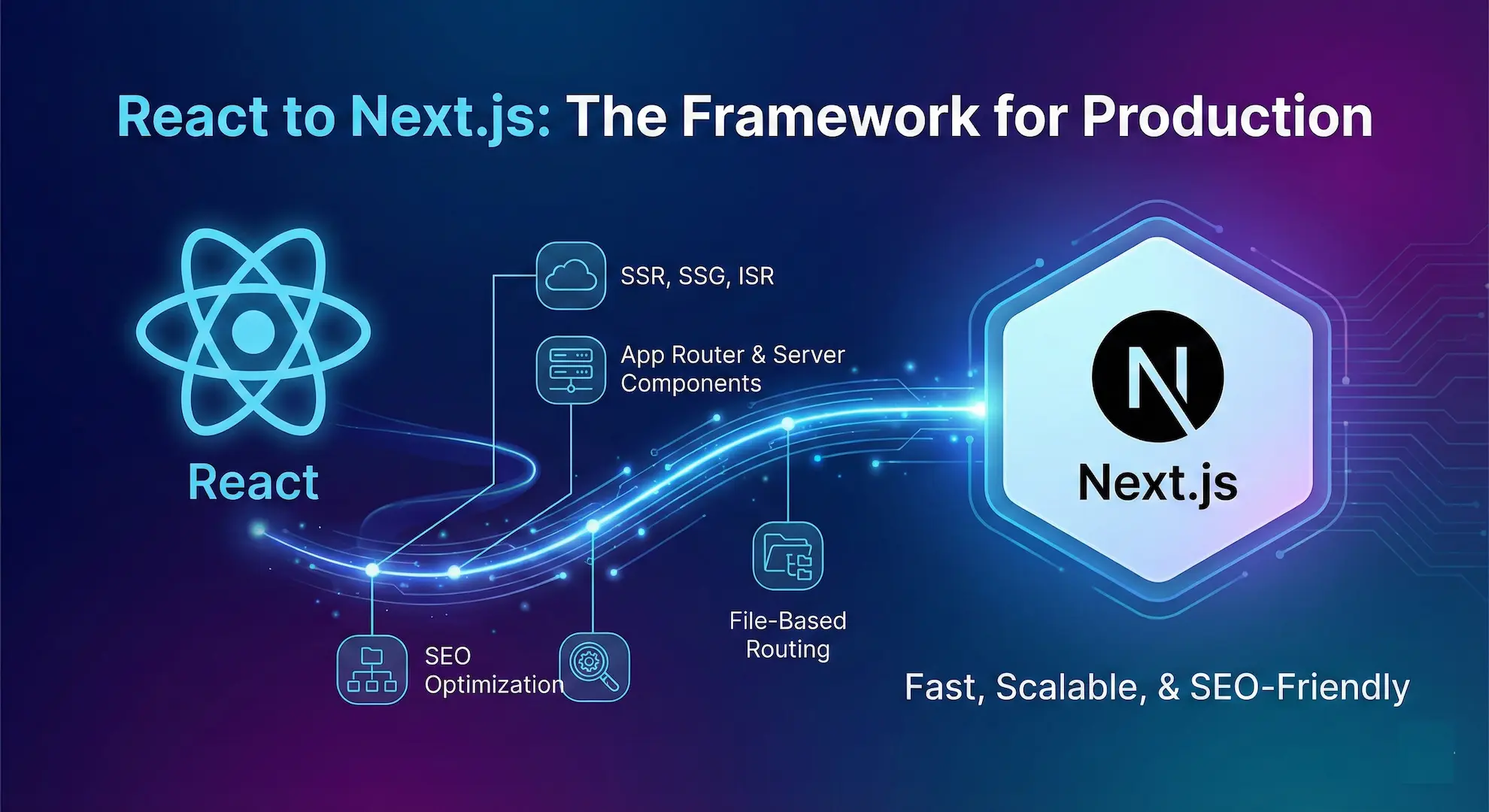
Next.js is the giant in the room. Maintained by Vercel, it has become the default recommendation for starting a new React project. It is incredibly versatile, offering multiple ways to render content.
- Rendering Flexibility: Next.js gives you every option: Static Site Generation (SSG) for speed, Server-Side Rendering (SSR) for dynamic content, and Incremental Static Regeneration (ISR) to update static pages in the background.
- React Server Components (RSC): The latest versions of Next.js are pushing the boundaries with Server Components, allowing you to fetch data directly in your components on the server without sending that logic to the client.
- Ecosystem: Because it is the most popular, it has the largest ecosystem of plugins, tutorials, and third-party integrations.
- Best For: Large-scale applications, enterprise platforms, and complex projects that need a mix of static and dynamic content.
3. Remix: The Web Standards Purist
Philosophy: “Don’t fight the web platform.”
Remix (recently acquired by Shopify and now merging with React Router) takes a different approach. It focuses heavily on using existing web standards—specifically HTTP headers, form submissions, and URL segments—to manage your app’s state.
- Unified Data Flow: In Remix, your backend logic (Loaders) and your frontend UI live in the same file. When you submit a form, you aren’t manually managing API states; you’re just submitting a standard HTML form that Remix intercepts and handles on the server.
- Nested Routing: Remix has a best-in-class routing system. It can load data for multiple parts of a page in parallel, meaning a slow widget doesn’t block the rest of your dashboard from showing up.
- No “Static” Mode: Unlike Astro and Next.js, Remix relies heavily on dynamic SSR. It believes fast CDNs and efficient caching headers are better than static builds for most modern apps.
- Best For: Dynamic SaaS applications, user dashboards, and data-heavy platforms where user interaction (forms, mutations) is frequent.
Technical Showdown
| Feature | Astro | Next.js | Remix |
| Primary Focus | Speed & Content | Flexibility & Ecosystem | Web Standards & UX |
| Hydration | Partial (Islands) | Full (mostly) | Full |
| Data Fetching | Simple await in frontmatter | getStaticProps / Server Components | Loaders & Actions |
| Learning Curve | Low (HTML-like) | Medium (Specific API knowledge required) | Medium (Requires understanding HTTP/Web) |
The Verdict: How to Choose?
Instead of asking “Which is best?”, ask “What am I building?”
- Choose Astro if: You are building a blog, a portfolio, a corporate landing page, or a news site. If your site is mostly reading and looking at pictures, Astro will give you the best performance with the least effort.
- Choose Remix if: You are building a highly interactive dashboard, a SaaS product, or an app with complex user flows and many forms. If your app feels like “management software,” Remix simplifies the data handling immensely.
- Choose Next.js if: You need a bit of everything. If you are building a massive e-commerce site that needs static pages for products but dynamic user accounts, or if you simply want the safety of using the industry standard with the most job opportunities, Next.js is the safe bet.